Showing posts with label 8. Show all posts

Friday, November 21, 2014

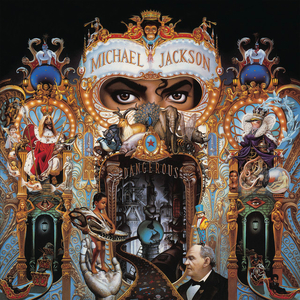
Michael Jackson - “Dangerous” (1991)


Rating: 8
Best Song: “Who Is It”
Listening to Dangerous again, this might be the Michael Jackson album I feel most irrational about (I keep saying this with each subsequent album, but I can guarantee that I won’t be saying it about HIStory...). My impression is that although Dangerous yielded the requisite number of hit singles and album sales, its historical reputation hasn’t exactly held up. But I feel this is due to factors that are largely external to the album itself. It happened to be the album that was displaced at #1 by Nevermind, purportedly signaling the change in the market from pop trash to grunge Its sound dates itself perhaps even more irrevocably than his first few albums. And of course, it was not too long after the release of Dangerous that the first child molestation charges were levied against Jackson, beginning the change in public perception of him from a benevolent eccentric to an at best, deeply disturbed recluse, and at worst, child predator.
But what I am really interested in is the music on Dangerous and in 1991, Michael’s songwriting and melodic skills were still at their peak. The quantity of strong hooks and melodies here is definitely on the level of Bad and Thriller. He still maintained his level of creative control and 11 of the 14 songs here were at least co-written by him. And from an emotional resonance perspective, there are at least glimpses of genuine torment here, belying the album’s reputation as a dated pop monolith. Well, perhaps it is a dated pop monolith, but I can’t really think of any pop artists since Jackson who have dared to make albums quite like this one.
That said, there are several problems with Dangerous that prevent me from giving it the rating I want to give it. First, Michael finally cast off Quincy Jones as producer and brought on Teddy Riley, progenitor of the ‘New Jack Swing’ sound, basically meaning sharper beats and heavier drums to give the album at least a little bit of a hip-hop feel. I admit to having a bit of nostalgia towards this sound due to growing up with this album, but it certainly feels more like a fad than anything long-lasting, and I’m not convinced it was entirely within Jackson’s comfort zone (indeed although fortunately they are all brief, there are a few guest raps on Dangerous, which all feel entirely pointless). Second, the album is 77 minutes long, presumably to fill out the entire CD length, as by this time CD had replaced cassettes and vinyl as the dominant medium. Yet I see little artistic reason here to make the album that long as it wasn’t marketed as a ‘double’ album nor does he use the extra space to explore new terrain. Instead, songs that would have been 3-4 minutes on previous albums are needlessly extended to 5-6 minutes in length. Finally, and most damning, I outright dislike 3 of the songs here, which I could really only say about “The Girl is Mine” from his albums up to this point, and two of them take up about 15 minutes of the album. So although overall, I still rank it highly, it’s not hard for me to imagine a version of Dangerous that would challenge Bad and quite possibly beat it for the title of my favorite Michael Jackson album. Unfortunately, this isn’t quite it.
Still, setting aside a few unfortunate inclusions on the album (which I will get to later), I basically like everything here. “Black or White” and “Remember the Time” are as good as any singles he had released until this point, but seem to be the only songs most people know from the album. So I must also spotlight songs like the title track, another entry in the “Billie Jean/Dirty Diana” sequence, yet still holding its own with an unforgettable refrain (“Take away my money/throw away my time”), even if the spoken word parts are a bit much. “In the Closet” is another song that shouldn’t work, trying to build up sexual tension with breathy vocals and spoken-word sections, but the chorus (which admittedly, he repeats over and over again for about 3 minutes at the end of the song) is still one of Jackson’s best. Also for the third straight album, he throws in a rock song with a guest guitarist (this time, Slash), yet I like “Give in to Me” nearly as much as any of its predecessors. Although these songs are bit more repetitive than on previous albums perhaps, Michael’s vocals are increasingly anguished, so there’s this weird undercurrent where at one level, you’re hearing impeccable pop music yet at another, there’s this tormented man-child trying to break his way out of his cocoon. The best example is the brooding “Who Is It,” an outright Jackson classic, with a totally melodramatic string arrangement that works nonetheless thanks to Michael’s pleading vocals, the slowly building tension, and in this case, two different sections that could qualify as immaculate pop choruses.
There are several songs I haven’t mentioned that basically all hit the mark, but I feel it is time to expound on the bad stuff here. Much as I love “Man in the Mirror,” it unfortunately awoke Jackson’s latent humanitarian balladeer persona, resulting in the dreadful “Heal the World,” which I have hated for about twenty years now, and see no reason to stop any time soon. Enough time has given me the ability to admit that the melody for “Heal the World” is not all that bad. But when you add in clips of children talking about making a difference, a treacly string and piano arrangement that sounds like it belongs in a Ronald McDonald House commercial, the result makes me want to vomit. Ballads have never been Michael’s forte, but at least he never had this level of pretension before. I suppose he was probably sincere in trying to ‘make the world a better place,’ but I can’t really see how writing a cloying, saccharine song about it accomplishes that. “Will You Be There,” included on the Free Willy soundtrack, is a mess too(sorry Betsy!). Again, the basic melodic hook is fine and entertaining to sing along to, but the 90 second sampled Beethoven intro, gospel choirs, and spoken-word outro all tell us that this is supposed to be some sort of deeply moving emotional experience, and it surely isn’t that. Finally, “Gone Too Soon” is another boring ballad, not even written by Michael, though at least it has the mercy of being short.


So with all the vitriol I’ve summoned for certain songs here, I could probably justify giving Dangerous an even lower rating. But I really do enjoy the majority of the album just as much as I enjoy his more acclaimed albums. To me, the flaws prevent it from being great, not from being good. That said, knowing what we know now, Dangerous was the start of Michael’s musical decline. His remaining studio albums would exacerbate the trends shown here: needless bandwagon jumping onto the latest commercial trends in order to seem relevant, filling out the entire CD for no reason, and more and more awful ballads. Yet at least on Dangerous he could still deliver high-quality pop like nobody else in the business.

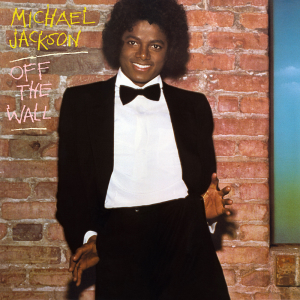
Michael Jackson - "Off the Wall" (1979)


Rating: 8
Best Song – “Don’t Stop ‘Til You Get Enough”

            First, a brief biographical note on me and Michael Jackson. Between the ages of four and ten, the only music I ever listened to was Off the Wall, Thriller, Bad, and Dangerous. I spent countless Saturday mornings watching Michael Jackson music video marathons on MTV and VH1. In short, me and the King of Pop go way back. This can potentially present some difficulties as a reviewer, for while these are ultimately my subjective opinions, I am also attempting to be ‘objective’ in the sense that I apply consistent standards to the albums I review. The conundrum I run into with reviewing Michael Jackson is that my favorite songs of his make me feel inexpressibly nostalgic in a way that goes well beyond what I view as their objective merits.
For although at a gut emotional level, I probably enjoy “The Way You Make Me Feel” as much as I enjoy just about anything else, it’s hard to avoid my analytical conclusion that Michael’s music is excellent by the standards of highly professional, corporatized pop music but is still highly professional, corporatized pop music which ultimately limits how good it can really be. Although I feel, especially as his career progressed, that more and more of his personal artistic vision started to come through (and unlike many pop singers, he did in fact have an artistic vision), the way his music is presented usually feels chained to pop convention unlike a more exploratory contemporary such as Prince. Thriller is something of an exception to this, but it also underscores the other major problem I have with Jackson, which is the filler. Again, by the standards of most artists played on radio, he looks consistent, but there are relative to major throwaways on every Michael Jackson album.
Ultimately, I look to find balance between these two different perspectives, since they both impact how I feel and react to the music. Thus, I suspect my ratings for his albums will be a bit higher than what most who have similar musical tastes to me otherwise would give them. But I’m not going to give them all perfect scores either.
So, Off the Wall. Like most reviewers, I start here because this was the first Michael Jackson album where he played a major part in the songwriting and overall musical direction. Although he certainly was not the only creative player on the album and probably had even more creative control as his career progressed, there is a marked difference in both sound and quality between this and his previous work. I haven’t listened to all of his early solo albums, but what I have heard was uninspiring, generic early 70s R&B and not really having anything to do with Jackson as an artist at all, so I quickly lost interest in being the rare reviewer to actually tackle them. The exception of course are the iconic Jackson 5 singles, but I have a strong suspicion that Jackson 5 albums weren’t much better either.
Yet here, Michael successfully made the transition that Justin Bieber will never make and emerges as a legitimate artist. Although the sound is instantly recognizable as late 70s disco-influenced dance pop, the songwriting is generally strong, and fairly consistent too. I’m sure that most have heard the singles “Don’t Stop ‘Til You Get Enough” and “Rock With You” and they are deserved classics. “Don’t Stop,” in particular, stands out as the most creative song here as well as the most uniquely Michael Jackson. Although its length instills fears of endless disco marathons, the guitar and horn-led groove is infectious and Michael’s falsetto singing endearing, if not exactly sexy. “Rock With You,” actually written by Rod Temperton, may be my personal favorite on the record, with a winning melody and vocal by Jackson.
What’s most impressive, though, both for a commercial pop album and what is effectively a debut or rebirth, is that Off the Wall rates as perhaps Jackson’s most consistent album. Although everything is basically in the same vein – either upbeat dance or mid-tempo ballads (mostly upbeat dance), it rarely feels too repetitive. It does follow a fairly predictable structure in that side one features the two big singles, followed by two good, but slightly weaker efforts (although it pains me to call “Workin’ Day and Night” weaker, as it rides the funky guitar/horn/falsetto triptych to almost as great effect as “Don’t Stop”). Side two opens with another strong single, the Temperton-penned title track, and then comes the clearly recognizable filler stretch before closing with another standout dance number (“Burn This Disco Out”). But even the filler stretch isn’t that bad, though perhaps mediocre. It helps that Jackson had enough clout to enlist Stevie Wonder and Paul McCartney as songwriters (though McCartney’s “Girlfriend” is actually a cover). Wonder’s “I Can’t Help It” is hardly one of his best (likely why he gave it away) but is at the same time quite strong for a designated filler tune, adding some smooth class to the second side.
Really, there’s nothing bad here. “She’s Out of My Life” comes close, but is saved by the famous legend (famous to me at any rate) that Michael couldn’t sing the song without bursting into tears and indeed he does sound like he’s starting to sob at the very end of the recorded version. Although I will spare my readers from me delving into the various biographical implications of this, it does add some intrigue to what is otherwise a fairly generic and not very memorable ballad. But otherwise, Off the Wall is impressively consistent and certainly has to rank as one of the best commercial dance-pop albums of its era. That said, Michael would of course move on to greater things and apart from maybe “Don’t Stop,” his personality had yet to fully imprint itself on his music, apart from his unique androgynous singing style. This music is all about dancing and having a good time, and nothing more, and believe it or not, he would go on to make music with more emotional weight. 

Kate Bush - "50 Words for Snow" (2011)


Rating: 8
Best Song: “Misty”
Kate’s creative comeback continues! Although given the seven year gap between this one and Aerial, perhaps 50 Words for Snow should be seen as a new chapter in Kate’s career. Met with fairly universal critical acclaim, I’m not going to disagree. Almost miraculously for an artist who released her greatest work 29 years earlier, and for an artist who already reinvented herself in 2004 with Aerial, she once again makes an album that is different from all the ones that came before, yet still inimitably Kate Bush

If I were to make a Kate Bush chronology, 50 Words does tie most closely to Aerial and the two albums certainly qualify as her ‘late period’ so far. Yet this is a different beast altogether, with long, almost ambient songs (just 7 tracks ranging from 7 to over 13 minutes). Although the piano, singing style and concept/fantasy songs are all still here, identifying this as a Kate Bush album, I’m still taken by how singular this album feels. The opening 9-minute “Snowflake” nicely sets a template for the rest of the album. It utilizes a repeated piano riff throughout the song that serves as the melodic backbone, then slowly builds in instrumentation as Kate gently sings of being a snowflake falling to Earth. Yet if by the song length, you would expect some sort of epic composition, this isn’t really it. It does have multiple sections, with Kate hitting some increasingly high notes in the mid-section, yet even this is done in a fairly understated way. There’s no crescendo or ultimate payoff, instead the different sections of the song rotate in and out almost randomly, before fading out on the opening verse/chorus section for nearly the entire second half of the song. Instead, it’s all about whether she captures a certain atmosphere, perhaps the feeling of being alone in a dark house on a cold winter night. It’s not about the immediate payoff but whether you’re captured by that atmosphere. In that sense, she does tie back to her earlier career, just through different means.

Much to my delight, most of the songs here see Kate playing different parts again, working in the conceptual/fantastical/theatrical mode that was always her strength. The standout track of the album (and one that I'm unhealthily obsessed with) is “Misty,” telling the story of a love affair with a snowman. It works on the strength of its repetition, slowly building in intensity as it goes. It doesn’t hurt that it has some beautiful piano playing and that the instrumentation creates an increasingly intoxicating atmosphere. It’s all about a slow, measured pace, where it doesn’t matter that it takes five minutes for the guitar to come in as long as it’s satisfying when it gets there. Yet even though it remains understated, the passion in Kate’s voice is still there and ultimately sells it. “Snowed In on Wheeler Street,” a duet with Elton John, has another great and classically Kate concept, about time traveling lovers. I interpret it as being similar to the novel The Time Traveler’s Wife, though with two people traveling through time instead of just one. Regardless, despite my usual hatred of the ‘celebrity duet’ concept, I think it makes sense here, and Elton holds his own with Kate vocally, proving that he quite as washed up as I thought.

I do have some reservations about the album that prevent me from giving an even higher rating even though I am tempted to do so. The slow pace and length of these songs could make this album seem inaccessible and indeed, it did take me a second listen before the songs started to make sense to me (although I still can’t entirely wrap my brain around the structure of “Lake Tahoe” or even “Snowflake”). I still find the title track is tedious (the concept is that actor Stephen Fry recites 50 synonyms for snow) – although the concept is interesting and the different words for snow fairly creative, there’s not really a lot of meat to the track musically so the novelty value didn’t last for me. And perhaps more importantly in the broad scope of her career, although I find this shift in style quite satisfying from a creative perspective, especially when so many artists of Kate’s age are content to rest on their laurels and deliver generic re-workings of their older classics, I need the ‘insane’ factor to really take me to the next level with Kate. But in the end, these are mild reservations, and I am quite satisfied with 50 Words for Snow, and perhaps, most importantly, eager to see what she will release next.

Kate Bush – “Aerial” (2005)


The quintessential comeback album, Aerial can successfully boast of being Kate’s best album in 20 years, going all the way back to Hounds of Love. I find that’s often an overused claim, but in this case, she only released two albums during that span, including none since 1993. But it also helps that Aerial is indeed a very good album, and one that manages to sound only like Kate Bush while not really resembling any of her earlier records all that much. Instead, much to my delight, her lengthy hiatus seems to have successfully cured her of any attempts to stay commercially relevant and instead follow her muse. It also avoids the potential trap of trying to simply rehash her most acclaimed albums, since in Kate’s case, doing so wouldn’t really make any sense anyways given that the whole point of those albums was how wonderfully odd and unique they were.

So what does Aerial sound like? Well, it is largely built around the piano, so it does hearken back to her early work in that sense. Yet it also is clearly the work of an older and more mature artist, with a more relaxed, lush feel and largely normal vocals. There’s no pixie singing or piercing screams to be found here. She still makes use of keyboards and strings, but unlike on her last couple albums, the string work is actually classy (a great example being “Bertie” with rich, understated strings to go along with classically picked guitar). In large part, the music is not so easily dated, which is a major plus.

Yet even if her performances here are understated and there is very little of the operatic diva left, Bush still retains her love of fantasy and playing characters. Thus, Aerial is divided into two suites, similar to Hounds of Love, though in this case, it’s two separate discs, entitled A Sea of Honey and A Sky of Honey, making this Kate’s first double album. And it’s these eccentric, but fully realized fantasies that ultimately connect Aerial to her earlier work. Who else but Kate would make a song called “Pi” where periodically throughout the song, she indeed sings digits of pi? Or “Mrs. Bartolozzi,” about performing domestic duties (with a chorus of “Washing machine”)? Even if “Mrs. Bartolozzi” is really about Kate’s life away from music, as some critics have speculated, it still maintains a slightly fantastic mood. The second disc is more obviously conceptual, as there are no breaks in the music, and recurring motifs of birdsong as well as lyrical themes.

Overall, for a double album, I’m impressed by how even Aerial is. Perhaps it’s due to the conceptual unity, but there is no filler here whatsoever. It’s much more laid-back and chill than her earlier work lacking both the insanity of her early albums and even the vocal theatrics of her last couple. But Kate is still a compelling singer and imbues all of these songs with her personality. At its best, she captures a relaxed, earthy mood while also transporting the listener into her fantasy world of birds, art, and mathematics. On the second disc, I’m particularly taken by the lush textures of “An Architect’s Dream” and the haunting bass of “Somewhere in Between.” But really, it’s enjoyable all the way through. It did take me some time to absorb and let it come to me on its own terms, because there are no immediately stunning moments. But overall, Aerial is a definite success and well worthy of the title of ‘comeback album.’

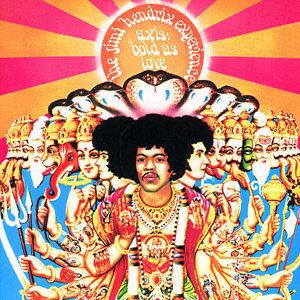
The Jimi Hendrix Experience – “Axis: Bold as Love” (1967)


Rating: 8
Best Song – “Little Wing”

If there were some sort of critic consensus Hall of Fame, I feel it’s safe to say that Axis: Bold as Love would be in it. So perhaps some words on why it doesn’t make my personal one. It's the melodies! (or lack thereof) This complaint is not an uncommon one on some of the websites I read, but I do feel it’s worth pointing out that Jimi was capable of writing great songs, so it would be grossly unfair to completely disparage his songwriting abilities. Instead, I would say he was an inconsistent songwriter and although a very good one on the whole, not up to the same level as some of his 60s contemporaries.

So where Are You Experienced? struck the right balance for me between great guitar-playing and great pop songwriting, I find Axis to be yet another excellent album from a guitar-playing perspective (probably goes without saying) but only a solid one from a melody perspective. The album is a fairly even one, but it operates at a level of 'pretty good' rather than 'great'. Where nearly every song on the debut was a landmark in its own right, here we got a lot of overly simplistic pop songs that all run together, distinguished only by whether the guitar playing particularly catches my fancy (for example, the relaxed riff on “Wait Until Tomorrow” draws my attention, but the rocking distortion of “Little Miss Lover” doesn’t really), which I imagine to be a fairly random impression anyways.

Of course, I still rate the album highly and it’s because you can always just listen to the guitar parts and be entertained. And there is at least one undisputed classic – “Little Wing,” which is one of those rare songs here that feels epic, with its guitar solo that suddenly takes flight, and yet is in actuality two and a half minutes long. But I’m not sure it’s entirely a good thing when the song written by the bassist (“She’s So Fine”) is one of the most memorable on the album. Still, Axis is absolutely worth absorbing, just after the other two Hendrix albums.