Showing posts with label Michael Jackson. Show all posts

Friday, November 21, 2014

Michael Jackson – “Michael” (2010)


Rating: 4
Best Song: “Monster”
       
            I probably should have known better, but I tried anyways. Michael is the first posthumous ‘studio’ album released after Jackson’s death in 2010. As it does consist solely of previously unreleased material and tracks he worked on post-Invincible, I decided it warranted a proper review. Yet after three listens, I don’t find that I really have a lot to say. I wouldn’t say that Michael is just a blatant play for record sales (that dubious distinction would go to the ceaseless procession of compilations and repackaging that Sony has been foisting on the public), as it does seem to be a legitimate look at what Jackson was working on prior to his death, but it’s the least interesting of any Michael Jackson album (perhaps excluding his career before Off the Wall). At 41 minutes, it’s at least mercifully short, and perhaps by virtue of that fact alone, of a higher quality than the album Jackson might ultimately have released if he had stayed alive. But it does little to dissuade my notion that Invincible marked the end of Jackson’s artistic relevance.
            Although released nine years later, Michael largely does feel like a shorter version of Invincible with about the same ratio of mediocre, but passable dance-pop to horrible ballads. I’d say about half the songs here are at least decent, but not more than that. I highlight “Monster” as the best song because it has the chorus that grabbed me the most, but it shares the problem with all of his 90s albums of adding a superfluous rap (this time by 50 Cent). The other dance songs are at least memorable, but the cluttered production and frequently Autotuned or whispered vocals ensure that they never move beyond mildly entertaining. Also continuing in the trend started with Dangerous, Michael’s attempts at sentimentality uniformly make me cringe, although at least there is only one truly vile song here (“Best of Joy”).
            Not much else to say here, besides to call shenanigans on any critic who applied the ‘best since X album’ label on this microwaved, days-old leftover of a Michael Jackson album that could never hope to match the peaks of HIStory, let alone an actual great album like Dangerous. In terms of average song quality, it’s about the same as Invincible, but I give it a slightly lower rating because it’s just so inessential, except to the true Michael Jackson acolyte. But what does it really matter anyways?
     

Michael Jackson – “Invincible” (2001)


Rating: 4
Best Song: “Butterflies”

            If Dangerous and HIStory signaled the beginning of the end of Jackson’s reign as the King of Pop, then Invincible is where he was finally deposed. For all the problems I had with HIStory, and even if it was no longer particularly innovative, it at least still had several songs where Jackson was still working at a level far beyond his contemporaries. Invincible is quite lacking in this regard, and for the first time, Michael Jackson could be any random pop artist.
            It follows the same basic template that he started with Dangerous in order to stay modern, which in hindsight, was more and more of a bad idea. It runs the entire length of the CD, employs a new, hip producer, features guest rappers for no discernible reason, and leans heavily on sentimental balladry. Yet where in the 90s he still had enough songwriting ability to make the formula work, it doesn’t here. The ballads are more numerous than on previous albums, and provide predictable low points, as there are several awful ones scattered through the second half of the album. Yet even the dance songs, normally where Jackson would be able to prop up the album, are fairly mediocre.
            The opening trio of “Unbreakable,” “Heartbreaker,” and “Invincible” should have been the section where Jackson could have established some goodwill with me before the inevitable onslaught of ballads I was destined to despise. Yet although these three songs aren’t terrible, and feature at least decently memorable melodies, I am struck by how stiff and non-danceable they feel. In new producer Rodney Jerkins’ attempt to create a modern sound, he somehow lost the funk and rhythmic drive that was always so crucial to making these types of songs operate. It also doesn’t help that Jackson’s vocals were severely diminished by this point. In the verses of all these songs, his voice is low and grumbly and his range lessened. Then when the choruses come, the harmonized Jackson background vocals, always present on his earlier albums, are here the focus instead of the counterpoint, indicating to me that either he or his team of producers were uncertain that he had the ability any more to have his voice as the main focus of the song. Although I rank Michael’s peak vocal abilities well below some of my R&B favorites like Stevie Wonder and Prince, his unique timbre and ultra-high range were part of what separated his music from the rest. When that’s missing and the beats and rhythms are just OK, there’s not a lot that makes this music feel like Michael Jackson, apart from the recognizable chord changes leading into the raps that are probably identical chord progressions to previous work (I could probably look this up, but I prefer to rely on my ears for this one). This all also applies to the more retro lead single “You Rock My World,” which for the first 30 seconds (ignoring the pointless spoken-word intro with Chris Tucker a la “Black or White”) of its thick bass and strings arrangement does sound like classic Jackson, but never quite gets there due to the weak vocals and the fact that it’s so desperately trying to capture his old vibe (witness the bridge that is a near identical replica of the bridge from “Remember the Time” melodically).
            Weirdly, the first few ballads on the album are actually not bad perhaps because they aim for a similar feel to songs like “Human Nature” or “The Lady in My Life” rather than “Heal the World.” They’re not great either, but I like both “Break of Dawn” and “Heaven Can Wait” just fine. On “Heaven Can Wait,” Jackson actually opens up in the last minute of the song with his singing and it’s clear that he was straining to sing at this time of his life, as his increasingly harsh delivery has now become almost a bark. Yet I actually prefer this to the smooth, processed vocals of most of the album. At least there’s a clear passion and energy here, and that was probably the one factor left that could still make him stand above his peers. The smooth “Butterflies” is one of two songs on the album that I rank as near-excellent, and although it’s strained, I love the fact that he goes into full falsetto for the second verse, adding some rare appeal to a Jackson ballad.
           So if I could take the first seven songs and add in a few others from later in the album (specifically “Privacy,” “Whatever Happens” and “Threatened,” particularly “Whatever Happens” with another one of the few examples where Jackson actually tries to sing on the album), I probably wouldn’t give it that bad of a rating. Unfortunately, tracks 8-14, excluding “Privacy,” a passable anti-tabloid rant that would have fit well on HIStory, are the worst stretch of songs of Jackson’s career and ultimately drag down the rating significantly. In fact, this section is so bad that it’s taken me a lot of listens to realize that the surrounding material was at least decent enough that this album should get a 4 instead of a 3 or even lower. The worst offenders are the self-penned “Speechless,” a ballad that starts out a capella but with a totally unmemorable melody, then gets progressively worse by adding in all sorts of gushy strings and of course, the Andrae Crouch choir, and “The Lost Children,” which I could probably have guessed I would totally abhor just by the title but once the inevitable choir of children comes in to sing the chorus, it really is sublimely awful, and if he really molested children, it probably goes well beyond being artistically repellent to actually being offensive. The ballads contributed by outside songwriters are not much better and much as I usually love R. Kelly’s megalomaniacal ballads, his contribution this time (“Cry”) falls short as well. The one dance song that breaks up this terrifying section of ballads (“2000 Watts”) is a bust as well, clearly trying to sound futuristic but really going nowhere.
            Ultimately, I have to say that Invincible deserves its bad reputation and rightfully marked the end of Michael’s commercial relevance. There are occasional glimpses of his previous talent, but rarely even for an entire song. Although plenty of artists besides Michael Jackson have found it difficult to keep up their quality 22 years after their first great album, given the evident weakness in his voice and increasing reliance on outside producers and songwriters, it’s hard not to think that his various health problems, both mental and physical, hadn’t contributed to the decline. Had he been more stable and less concerned about trying to make a big commercial comeback, I think he might have still had the potential to release some solid, if not great albums by revisiting the sounds of Thriller and Bad. Alas, that was never to be as Invincible was his final release before his death in 2009.
          

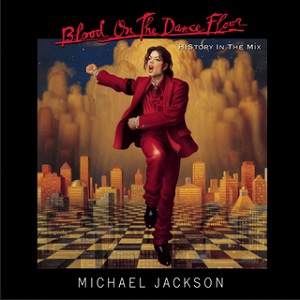
Michael Jackson – “Blood on the Dance Floor: HIStory in the Mix” (1997)


Rating: 4
Best Song: “Blood on the Dance Floor”

            A rating of 4 indicates an album that I see as a failure, but I don’t actually feel that strongly about Blood on the Dance Floor. The reason is that, perhaps in following the similar misguided marketing strategy of its parent album, he this time pairs his new material (just five songs) with eight dance remixes of songs from HIStory. From an artistic perspective, I could probably get away with blasting the whole concept and just giving it a 1. Even the five new tracks include previously recorded material and outtakes, so it’s obvious that the whole project existed solely for the purpose of selling more albums and promoting Jackson’s lengthy “Ghosts” video.

            Fortunately, the project is salvaged by the fact that I do enjoy the five original tracks that start off the album. None of them would rank in the upper echelon of his oeuvre, but still range from solid to excellent. The title track is basically in the HIStory/Dangerous style, which is unsurprising given that it dates back to 1991, and compares well to “Dangerous” with muttered verse vocals erupting into a melodic chorus. “Morphine” drew some comparisons to Trent Reznor with its clanging metallic beat, but I feel that is overwrought – the main section of the song is really just a slightly more abrasive version of the dance songs from HIStory. What intrigues me about the song is the mid-section where it breaks down into “Heal the World”-esque strings and gentle piano, except that this time Michael is singing about abusing Demirol instead of saving starving children. It actually works for me in this context, perhaps because of the contrast with the harsher verses of the song, or because the lyrics make it eerie instead of sentimental.

            “Superfly Sister” is probably the most generic of the quintet, but still is a perfectly passable funk track. “Ghosts” again touches on the basic build-up of the title track, but it’s hard to fault the formula when he nails it so perfectly, again steamrolling out of downbeat verses and into the chorus with melodic gusto. Actually, on both this track and the subsequent “Is It Scary,” it’s actually the lead-in section to the choruses that I find most compelling and capture a vintage Michael Jackson, also known as my nostalgic sentiment. For this was indeed the last Michael Jackson album of my childhood. I still remember the delight I felt when I randomly discovered it in Wal-Mart one day, having had no idea that it was released.

            Unfortunately that sentiment does not extend to the eight dance remixes, which severely drag down the rating of the album, given that they make up a majority of the running time. This is one of those times where I find it unnecessary to delve into the differences between the remixes because I find the whole idea completely pointless. I’m sure it’s possible to make a creative remix but none of these strike me as interesting. Instead, the primary goal of the remixers employed here appear to have been to add a monotonous dance beat and ensure that the tempo never changes. My enjoyment somewhat wavers based primarily on how natural the instrumentation is – thus the Fugees’ remix of “2 Bad” is at least more engaging than the appalling remix of “Stranger in Moscow” where somebody somehow had the idea that adding a generic techno drum beat to an introspective ballad wouldn’t turn it into a terrible song. But I’m not sure it really matters, because with zero exceptions, I would prefer to just hear the original Michael Jackson version to any of the remixes.


            So I’m not really sure what the right rating is to give to an album like this one. I settled on 4 because listening to it straight through, my overall enjoyment level is negative, based solely on the fact that the remixes outnumber the original material. But in the digital era, it’s easy enough to stream or download the first five songs and ignore the rest, making it not totally worthless. It certainly is an album that could be enjoyed by a fan if nothing else, which is more than I can say for Invincible…

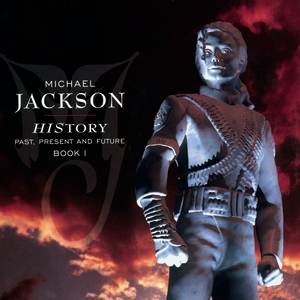
Michael Jackson – “HIStory” (1995)


Rating: 6

Best Song: “They Don’t Care About Us”

(Reviewers’ note: I am reviewing the second disc of HIStory featuring all new material as it was packaged with a greatest hits album as the first disc.) My thoughts on the first disc are pretty simple: just get the original albums, there are only four of them! As for the second disc, it is more or less a sequel to Dangerous, but with all of the negative aspects exacerbated. Once again, it’s needlessly long, and not really in a way that makes any sense. In his attempts to appeal to all audiences, the result is totally incoherent as an album. There are several terrible songs that make me long for the relative charms of “Heal the World.” Perhaps predictably after the child molestation scandal, the paranoia in his lyrics is intensified, and not really in a way that redeems the man. Yet for all that, I still give HIStory a positive rating, and don’t think it entirely deserves its reputation as a disappointment.

Although they make up a smaller portion of the album than ever, there are at least several songs here that compare well to anything in Michael's back catalog. He finally gets the celebrity duet right with the opener “Scream” by de-emphasizing the significance of the duet with his sister Janet to the point where the song wouldn’t really have been affected either way if he had just sang the whole thing himself. That may make it seem pointless, but “Scream” is a perfectly fine single with a level of energy to match the spectacle of its $7,000,000 music video. I’ll avoid weighing in on the controversial lyrics of “They Don’t Care About Us" and instead offer my regrets that the critical focus on the lyrics marred what I see as one of his best songs ever, musically. Jackson delivers the simplistic, harsh verses with conviction and the melodic chorus provides the perfect contrast, giving the song an emotional momentum that it never relinquishes. The production, with its ghostly choirs of multi-tracked Michael Jacksons, also reminds me of the similar torment I felt Jackson captured with “Who Is It,” making me wish that he would sit in the producer’s chair more often.

As always, I feel the best songs here are generally the ones that Jackson wrote and produced himself, rather than the ones done in tandem. “Stranger in Moscow” is a rare ballad for him that avoids mawkishness and/or tedium, instead nicely evoking the isolated feeling of the lyrics with a sparse guitar arrangement before culminating in an impassioned coda. “Earth Song,” though relatively unknown, at least in the US, challenges “Man in the Mirror” as his greatest save-the-world ballad, and perhaps proving that these types of songs are either really great or really bad. But in this case, though the initial chorus veers towards the sappy, the song builds to a dramatic crescendo with Jackson screaming out things like “What about elephants?” “What about crying whales?” “What about forest trails?” over the backing vocals of the Andrea Crouch Choir, stalwarts in all of his humanitarian epics. It could be about llamas for all I care, but like “Man in the Mirror,” there’s undeniable power to it, and although I suspect he felt as sincerely about “Heal the World” as he did about this one, he was actually able to capture that sincerity and passion in his music here.

I don’t know that if Jackson would have been able to sustain creative momentum if he had written and produced everything himself (actually, the last 1/3 of the album is almost definitely a sign that he couldn’t have), but I do feel that the attempts to stay current with the latest trends in R&B/hip-hop by bringing in famous producers of the time (in this case, Jimmy Jam, Terry Lewis, and Dallas Austin) don’t entirely work. Theoretically, the generic HIStory track isn’t so different from the generic Dangerous track in this regard, but whether it’s just a greater level of nostalgia on my part, here I find myself dying for the melodic choruses to emerge from the over-compressed murk on songs like “Tabloid Junkie” and “This Time Around.” The thudding bass and pseudo-rap verses might have worked for some artists, but I don’t think they fit all that well with this particular artist, and these particular songs. That said, Jackson is guilty of the same sins on some of the songs he did produce himself (“D.S.” and “Money”), so I can’t exactly blame his producers. I do like all the songs mentioned (“Tabloid Junkie” and “D.S.” have particularly outstanding choruses) but compared to the best songs on the album, I feel that there are multiple visions for how the album would sound that openly conflict with each other.

Still, these are largely forgivable issues and if HIStory went on alternating prime Jackson material with more forgettable, but still decent attempts to stay modern, I would give it a rating pretty close to the one I gave Dangerous. Unfortunately, Michael had to go and prove that his creative instincts were starting to decay by including several truly, truly terrible songs. It all starts at track nine: “Childhood,” from the Free Willy 2 soundtrack, is a ballad in the basic “Heal the World” style, but one with no discernible melody, just copious amounts of string instruments in the standard Hollywood vein. I suppose the lyrics about him having lost his childhood could be construed as surprisingly self-aware, but that doesn’t make them any less banal as presented here. Worst, it doesn’t really make any sense in the context of the album up to that point, but instead seems like it was included solely to cross-promote his work with Free Willy 2. Still, the album recovers a little bit after that point, before ending on a truly noxious stretch over the last three songs. The title track was obviously intended as an epic, with the song both beginning and ending with historically significant news clips. But the combination of modernistic verses with a sappy, purportedly anthemic chorus just doesn’t go together at all, and in situations where a song is attempting to be some sort of grand statement, but is instead an incoherent mess, I can’t help hating it way more than if it were just trying to be a catchy pop song. I do like the bit leading into the chorus (“How many people must there be…”) but that’s not enough to save the song as a whole.

“Little Susie” revisits the song structure of “Will You Be There,” again sampling classical choral music for several minutes before leading into the actual song, which takes up only about 3 minutes of its 6 minute length. Although it doesn’t help that the main portion of the song is creepy, with lyrics, to paraphrase, about ‘a girl who fell down the stairs and nobody cared,’ it might be salvageable if the structure of the song made any sense at all. But the epic introduction and crashing strings are totally at odds with the fairly simplistic vocal melody. And sampling “Pie Jesu” for nearly half of the song does not automatically lend your song the somber atmosphere you’re hoping for. Instead, it detracts from it. Finally, the closing cover of Charlie Chaplin’s “Smile” is perhaps not as offensive as the preceding two songs, but is still pretty bad, due to the utter lack of creativity in the arrangement (pure Hollywood schmaltz).

So I do like it when musical artists take creative risks, and while some of Jackson’s risks do in fact succeed on this album, more of them fail terribly. Still, while four really bad songs is enough to drag down the rating of the album considerably, there are still eleven good to great songs here. His artistic decline was no doubt under way, but HIStory at least still spotlights the good if also the bad. Unfortunately, his next and final full studio release was destined to make me long for the relative charms of this album.

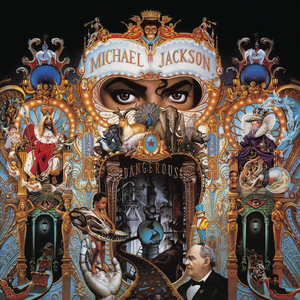
Michael Jackson - “Dangerous” (1991)


Rating: 8
Best Song: “Who Is It”
Listening to Dangerous again, this might be the Michael Jackson album I feel most irrational about (I keep saying this with each subsequent album, but I can guarantee that I won’t be saying it about HIStory...). My impression is that although Dangerous yielded the requisite number of hit singles and album sales, its historical reputation hasn’t exactly held up. But I feel this is due to factors that are largely external to the album itself. It happened to be the album that was displaced at #1 by Nevermind, purportedly signaling the change in the market from pop trash to grunge Its sound dates itself perhaps even more irrevocably than his first few albums. And of course, it was not too long after the release of Dangerous that the first child molestation charges were levied against Jackson, beginning the change in public perception of him from a benevolent eccentric to an at best, deeply disturbed recluse, and at worst, child predator.
But what I am really interested in is the music on Dangerous and in 1991, Michael’s songwriting and melodic skills were still at their peak. The quantity of strong hooks and melodies here is definitely on the level of Bad and Thriller. He still maintained his level of creative control and 11 of the 14 songs here were at least co-written by him. And from an emotional resonance perspective, there are at least glimpses of genuine torment here, belying the album’s reputation as a dated pop monolith. Well, perhaps it is a dated pop monolith, but I can’t really think of any pop artists since Jackson who have dared to make albums quite like this one.
That said, there are several problems with Dangerous that prevent me from giving it the rating I want to give it. First, Michael finally cast off Quincy Jones as producer and brought on Teddy Riley, progenitor of the ‘New Jack Swing’ sound, basically meaning sharper beats and heavier drums to give the album at least a little bit of a hip-hop feel. I admit to having a bit of nostalgia towards this sound due to growing up with this album, but it certainly feels more like a fad than anything long-lasting, and I’m not convinced it was entirely within Jackson’s comfort zone (indeed although fortunately they are all brief, there are a few guest raps on Dangerous, which all feel entirely pointless). Second, the album is 77 minutes long, presumably to fill out the entire CD length, as by this time CD had replaced cassettes and vinyl as the dominant medium. Yet I see little artistic reason here to make the album that long as it wasn’t marketed as a ‘double’ album nor does he use the extra space to explore new terrain. Instead, songs that would have been 3-4 minutes on previous albums are needlessly extended to 5-6 minutes in length. Finally, and most damning, I outright dislike 3 of the songs here, which I could really only say about “The Girl is Mine” from his albums up to this point, and two of them take up about 15 minutes of the album. So although overall, I still rank it highly, it’s not hard for me to imagine a version of Dangerous that would challenge Bad and quite possibly beat it for the title of my favorite Michael Jackson album. Unfortunately, this isn’t quite it.
Still, setting aside a few unfortunate inclusions on the album (which I will get to later), I basically like everything here. “Black or White” and “Remember the Time” are as good as any singles he had released until this point, but seem to be the only songs most people know from the album. So I must also spotlight songs like the title track, another entry in the “Billie Jean/Dirty Diana” sequence, yet still holding its own with an unforgettable refrain (“Take away my money/throw away my time”), even if the spoken word parts are a bit much. “In the Closet” is another song that shouldn’t work, trying to build up sexual tension with breathy vocals and spoken-word sections, but the chorus (which admittedly, he repeats over and over again for about 3 minutes at the end of the song) is still one of Jackson’s best. Also for the third straight album, he throws in a rock song with a guest guitarist (this time, Slash), yet I like “Give in to Me” nearly as much as any of its predecessors. Although these songs are bit more repetitive than on previous albums perhaps, Michael’s vocals are increasingly anguished, so there’s this weird undercurrent where at one level, you’re hearing impeccable pop music yet at another, there’s this tormented man-child trying to break his way out of his cocoon. The best example is the brooding “Who Is It,” an outright Jackson classic, with a totally melodramatic string arrangement that works nonetheless thanks to Michael’s pleading vocals, the slowly building tension, and in this case, two different sections that could qualify as immaculate pop choruses.
There are several songs I haven’t mentioned that basically all hit the mark, but I feel it is time to expound on the bad stuff here. Much as I love “Man in the Mirror,” it unfortunately awoke Jackson’s latent humanitarian balladeer persona, resulting in the dreadful “Heal the World,” which I have hated for about twenty years now, and see no reason to stop any time soon. Enough time has given me the ability to admit that the melody for “Heal the World” is not all that bad. But when you add in clips of children talking about making a difference, a treacly string and piano arrangement that sounds like it belongs in a Ronald McDonald House commercial, the result makes me want to vomit. Ballads have never been Michael’s forte, but at least he never had this level of pretension before. I suppose he was probably sincere in trying to ‘make the world a better place,’ but I can’t really see how writing a cloying, saccharine song about it accomplishes that. “Will You Be There,” included on the Free Willy soundtrack, is a mess too(sorry Betsy!). Again, the basic melodic hook is fine and entertaining to sing along to, but the 90 second sampled Beethoven intro, gospel choirs, and spoken-word outro all tell us that this is supposed to be some sort of deeply moving emotional experience, and it surely isn’t that. Finally, “Gone Too Soon” is another boring ballad, not even written by Michael, though at least it has the mercy of being short.


So with all the vitriol I’ve summoned for certain songs here, I could probably justify giving Dangerous an even lower rating. But I really do enjoy the majority of the album just as much as I enjoy his more acclaimed albums. To me, the flaws prevent it from being great, not from being good. That said, knowing what we know now, Dangerous was the start of Michael’s musical decline. His remaining studio albums would exacerbate the trends shown here: needless bandwagon jumping onto the latest commercial trends in order to seem relevant, filling out the entire CD for no reason, and more and more awful ballads. Yet at least on Dangerous he could still deliver high-quality pop like nobody else in the business.

Michael Jackson – “Bad” (1987)


Rating: 9
Best Song: “Smooth Criminal”

Okay, I really feel kind of irrational about Bad. I’ve lived with this music for so long that it’s a bit odd to put on my analytical hat and attempt to listen to Thriller and Bad as albums, and not just music to sing or dance along to. It’s odd to the point where unexpectedly I found myself developing new impressions. And it’s now obvious to me that Bad is the best Michael Jackson album, although I do wind up giving them the same rating. I believe I can defend that statement too, unwittingly using the framework I established in my Thriller review. Thriller certainly looks imposing with its sales records and enormous singles and music videos. From a perspective of innovation, Bad consolidates the gains of Thriller much more than it improves upon it. The basic framework was set and Bad follows it dutifully, with a mixture of funk, R&B, and rock all glossed up by Quincy Jones production. But over 25 years later, I’m not really sure why I should care which of the two was more original. This is pure pop music with very little pretention. It’s ultimately about the hooks, melodies and rhythms. And in that regard, I find Bad a much more consistent album while the high points are just as high, despite being lesser-known.

Most crucially, the songwriting credits for Bad show Michael having written 9 of the 11 songs, as opposed to 3 of the 4 on Thriller. Now perhaps I’m being idealistic and more creative control isn’t inherently a good thing. But although there are always exceptions, I really believe in general that music has more power when the main songwriter is also the performer. It makes sense to me that Jackson would be able to invest himself more in a song that he wrote himself rather than one handed to him at a recording studio. And considering that the 3 best songs on Thriller were his, the latent potential existed for more.

I’ve always wondered why, although I feel nostalgia for all Michael Jackson music to some degree, I feel it more for Thriller than I do Off the Wall, and more for Bad than I do for Thriller when the usual critical consensus is that Thriller is #1, Off the Wall #2 and everything else basically disposable. Now I’m not sure why it took me so long to realize it, but it’s because what I really love is the Jackson style, which I see as most ingrained starting here. He had basically perfected his style with the 3 big singles on Thriller but those were only 3 songs. Here, I enjoy everything that he wrote. Although the production on Bad dates it to 1987 and he has an undoubtedly commercial approach, there is serious creativity and songwriting skill here. I’ve listened to early demos of some of his songs like “Don’t Stop ‘Til You Get Enough” and was struck by how in the demos of the song he writes himself, the rhythm and vocal arrangements are completely laid out as they are in the actual songs. The drum machine arrangements here are emblematic Jackson and immediately distinguish him from lesser pop artists. His singing style is slightly more rough and gritty than it was before – it may be coincidence but I’ve always thought that his voice sounded different after his apparent change in skin color. Indeed, though his roots are obviously in 'black' music, there could probably be entire books written about the ways in which his music eschewed coded racial identifiers during this period in order to sell more albums. And most importantly, just as with the best songs on Thriller, his songs are dense with hooks.

As an album, I feel Bad works better than Thriller too, with a nice flow and being about as diverse as Michael would ever get. Weirdly, it has an example of basically everything I dislike about Jackson when he’s at his worst – the megalomaniacal anthem (“Man in the Mirror”), sappy adult contemporary (“I Just Can’t Stop Loving You”), dorky ballads (“Liberian Girl”), and celebrity duets (“Just Good Friends”), but I actually like all of these songs. “Liberian Girl” feels like filler at first, but works by delaying the payoff of Jackson’s pleading bridge that closes the song. “I Just Can’t Stop Loving You” could use a less cloying arrangement, but the melody and chorus are basically impeccable. “Man in the Mirror” is deservedly one of his best-known songs, and it’s actually great, showing that this kind of song can work if it has some power and build behind it. It would set an unfortunate template for his future career (the gospel choir would only work this one time), but here, I have no complaints. And it’s one of the two songs not written by Jackson! The closest to filler is “Just Good Friends,” his duet with Stevie Wonder, and fitting in with my theory, I have to think it’s because it was written by outside songwriters (seriously, you have two of the most successful pop songwriters of all time and neither one of them writes the song?). But it at least has some energy and is way better than “The Girl Is Mine.”

Bad also has examples of everything I like about Jackson, too, and in great variety. The title track is sort of dopey but still awesome, and given how his other celebrity duets turned out, perhaps it’s just as well that the rumors that he wanted Prince didn’t pan out. “The Way You Make Me Feel” is a swaying, romantic mid-tempo song much like track two on his previous two albums, and is my favorite example of these, beating out even “Rock With You” as one of my singalong favorites. “Dirty Diana” is clearly Michael’s attempt at mimicking “Beat It,” this time featuring Steve Stevens, guitarist for Billy Idol. Lyrically, it’s much more in the terrain of “Billie Jean,” being a misogynistic, paranoid song about a seductress who won’t leave him alone. As a Jackson aficionado, I still find these songs fascinating as they recur throughout his career (see “Dangerous” on the next album). They’re probably sexist, but more than that, just weird because of my feeling that they don’t reflect any sort of actual lived experience by Michael. But whatever, the vocal is legitimately tense and a sign of his evolution. Bad also closes much more strongly than Thriller, with one of his most iconic songs in “Smooth Criminal,” a perfect example of a singularly MJ song with an unforgettable rhythmic base and lots of anguished falsetto singing. The CD version also features a bonus track not on the original cassette version, “Leave Me Alone,” which is one of the most infectious songs here and features surprisingly complex multi-tracked vocal harmonies in the chorus.

Overall, I see Bad as where Michael (mostly) seized full creative control and consolidated the strengths of Thriller. Although he wasn’t able to really expand his musical horizons beyond Thriller, the fact that he contributed a much larger percentage of the songwriting makes Bad a more consistent and richer album. In my dream world, I still think that he could have made an even better album if not still somewhat shackled by the demands of trying to create huge album sales, but I nonetheless see Bad as just about the perfect mixture of his creativity and his commercial potency. Moving forward into the 90s, he would, if anything, put even more of his actual emotions into his albums (which wasn't necessarily always a good thing), but he would also pigeonhole himself by latching on to commercial trends that didn’t fit the actual music. The production on Bad may forever date it to 1987, but the songs themselves are timeless.

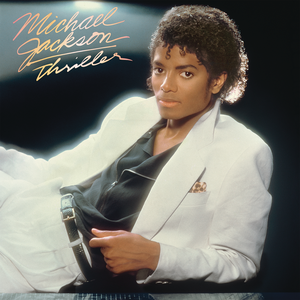
Michael Jackson – “Thriller” (1982)


Rating: 9
Best song: “Billie Jean”
            So, Thriller. The biggest-selling album of all time and one that holds a personal place in my heart too. I have so many memories associated with this album: actually being terrified when I first saw the “Thriller” video and not wanting to watch the werewolf sequence for several years, calling my dad and trying to figure out what was the name of the song that was always stuck in my head (“Baby Be Mine”). So perhaps no one could really fault me if I just let nostalgia dominate and gave Thriller a perfect score. Yet alas, I will not be doing so.
            The way I see it, Thriller is probably just about the pinnacle of mainstream commercial pop in the album format. It’s somewhat elusive as to what distinguishes a commercial-oriented album, but the main factor that stands out to me is that although Michael’s personality is a distinct one, he only actually wrote four of the nine songs on the album. The other five are songs, where judging by the liner notes, Jackson contributed only the vocal part. On his own songs, he’s usually credited for rhythm and vocal arrangements in addition to the songwriting, but on the others, this credit is absent. I suppose this isn’t inherently a bad thing, but it is worth examining the reaction to Thriller in context, especially that of the Motown tradition that Michael hails from.
In the 60s, the best Motown singles were undeniably great. But the artists themselves were given minimal creative control, and most of them are known for their singles, not their albums. It’s only when artists like Stevie Wonder and Marvin Gaye assumed complete creative control for themselves that they were able to emerge as creators of great albums, not just singles. So in this context, where not much is expected from a pop album outside of the singles, Thriller does look amazing. Seven of the nine songs on the album were Top 10 hits! So basically, you have nearly all singles. And almost all of those songs are very good to great.
Yet although I too love Thriller and rank it very highly, I feel it is ultimately held back by the fact that Michael only had partial, rather than full creative control. In that sense, it has one foot in the Motown days of yore and one foot in the full Gaye/Wonder breakthrough. Perhaps he just didn’t have it in him to write nine high-quality songs of his own. Yet although the songs contributed by other songwriters are generally quite good and catchy, what I see as the ‘big three’ of this album were all written by Jackson and really take things to a different level. The opening “Wanna Be Startin’ Somethin’” is somewhat similar to “Don’t Stop ‘Til You Get Enough,” riding a quirky, infectious groove for 6+ minutes. Yet I think it’s even better and increasingly intriguing as it goes. For one thing, it’s loaded with hooks, with at least five distinct sections that are all deliriously catchy. It’s also weird too, with lyrics hinting at Jackson’s paranoia and eccentricities like “You’re a vegetable/You’re just a buffet/They eat off of you” or “If you can’t feed your baby, then don’t have a baby.” It doesn’t get as much hype as “Beat It” or “Billie Jean” but I feel it’s just as good.
“Beat It” is of course most famous for featuring Eddie Van Halen on guitar and indeed, his riff and solo are integrated excellently into the song. It doesn’t hurt that the chorus ranks among Jackson’s catchiest refrains. “Billie Jean” is my pick, like many, for best song on the album and probably the best thing Michael ever did. Lyrically, it’s intriguing due to being his first of many songs about a jealous, insane, sexually starved woman out to get him. This moves beyond just simple paranoia especially because I doubt that Michael was having actual relationships with women during this time period. It’s almost like he’s making up what he thinks romance is like and when the result is this darkly paranoid, I can’t help feeling that it says a lot about how screwed up he was.
But armchair psychology aside, the real reason “Billie Jean” stands out is because again, it’s brilliantly catchy, with the opening bass line and “the kid is not my son” hook being particularly iconic, but also because it’s just so dense with vocal and instrumental hooks, perhaps even denser than “Wanna Be Startin’ Somethin’” There is not a wasted second in the arrangement and if more commercial pop was like this, perhaps I wouldn’t be so derisive of the corporate machine. But I don’t think it’s possible for most commercial pop to be like this, because this song is pure Michael and its success is reflective of his own vision and perfectionism.
Unfortunately that perfectionism did not seem to extend to the songs that he didn’t write, and that’s why although my designated ‘big 3’ are enough to earn Thriller a high rating, the rest of the album holds it back from gaining true masterpiece status in my mind. Which is not to say there’s nothing else of value here, of course. I’ve barely talked about the title track, which I feel non-Jackson aficionados would be surprised to learn was not actually written by Michael, but rather trusted sidekick Rod Temperton, who wrote three songs on the last album and contributes three here as well (“Thriller” plus “Baby Be Mine” and “The Lady in My Life”). I like “Thriller” a lot of course, although the effect isn’t quite as strong without the video. “Baby Be Mine” seems to get a lot of flak in most reviews I’ve read, and is only one of the two non-singles here, but whether it’s my childhood nostalgia, or its smooth, easygoing melody, I enjoy it greatly. “The Lady in My Life” definitely veers closer to filler and is proof that Jackson had far surpassed what Temperton was contributing at this point, which was not necessarily the case on Off the Wall. Yet while I enjoy all of these songs, along with “Human Nature” and “P.Y.T.,” they never quite make the leap from very good to great.

But the real problem here is Michael’s duet with Paul McCartney, “The Girl Is Mine.” Although the song was in fact written by Michael, it feels the most gimmicky and fake of any song on the album, with no purpose besides to be a vehicle for a big celebrity duet. Yet the result is honestly embarrassing, especially for Paul. The main body of the song is trite enough, but the spoken-word section, much as I enjoy to recite it word for word, is really stupid. I sense zero actual interest in the song from either Michael or Paul. Since Michael has the songwriting credit, perhaps it really was his harebrained idea, but this is the main reason that Thriller can’t muster a higher grade. In an alternate universe where Michael Jackson was not a child star and wrote and produced Thriller himself, I’d like to think it would still have “Wanna Be Startin’ Somethin,” “Beat It, and “Billie Jean,” (maybe minus the slick production and Van Halen guitar solo) but it would never have “The Girl Is Mine.”

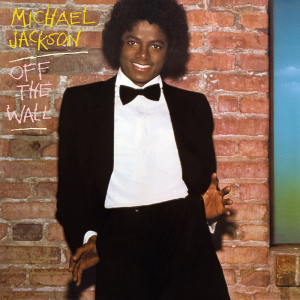
Michael Jackson - "Off the Wall" (1979)


Rating: 8
Best Song – “Don’t Stop ‘Til You Get Enough”

            First, a brief biographical note on me and Michael Jackson. Between the ages of four and ten, the only music I ever listened to was Off the Wall, Thriller, Bad, and Dangerous. I spent countless Saturday mornings watching Michael Jackson music video marathons on MTV and VH1. In short, me and the King of Pop go way back. This can potentially present some difficulties as a reviewer, for while these are ultimately my subjective opinions, I am also attempting to be ‘objective’ in the sense that I apply consistent standards to the albums I review. The conundrum I run into with reviewing Michael Jackson is that my favorite songs of his make me feel inexpressibly nostalgic in a way that goes well beyond what I view as their objective merits.
For although at a gut emotional level, I probably enjoy “The Way You Make Me Feel” as much as I enjoy just about anything else, it’s hard to avoid my analytical conclusion that Michael’s music is excellent by the standards of highly professional, corporatized pop music but is still highly professional, corporatized pop music which ultimately limits how good it can really be. Although I feel, especially as his career progressed, that more and more of his personal artistic vision started to come through (and unlike many pop singers, he did in fact have an artistic vision), the way his music is presented usually feels chained to pop convention unlike a more exploratory contemporary such as Prince. Thriller is something of an exception to this, but it also underscores the other major problem I have with Jackson, which is the filler. Again, by the standards of most artists played on radio, he looks consistent, but there are relative to major throwaways on every Michael Jackson album.
Ultimately, I look to find balance between these two different perspectives, since they both impact how I feel and react to the music. Thus, I suspect my ratings for his albums will be a bit higher than what most who have similar musical tastes to me otherwise would give them. But I’m not going to give them all perfect scores either.
So, Off the Wall. Like most reviewers, I start here because this was the first Michael Jackson album where he played a major part in the songwriting and overall musical direction. Although he certainly was not the only creative player on the album and probably had even more creative control as his career progressed, there is a marked difference in both sound and quality between this and his previous work. I haven’t listened to all of his early solo albums, but what I have heard was uninspiring, generic early 70s R&B and not really having anything to do with Jackson as an artist at all, so I quickly lost interest in being the rare reviewer to actually tackle them. The exception of course are the iconic Jackson 5 singles, but I have a strong suspicion that Jackson 5 albums weren’t much better either.
Yet here, Michael successfully made the transition that Justin Bieber will never make and emerges as a legitimate artist. Although the sound is instantly recognizable as late 70s disco-influenced dance pop, the songwriting is generally strong, and fairly consistent too. I’m sure that most have heard the singles “Don’t Stop ‘Til You Get Enough” and “Rock With You” and they are deserved classics. “Don’t Stop,” in particular, stands out as the most creative song here as well as the most uniquely Michael Jackson. Although its length instills fears of endless disco marathons, the guitar and horn-led groove is infectious and Michael’s falsetto singing endearing, if not exactly sexy. “Rock With You,” actually written by Rod Temperton, may be my personal favorite on the record, with a winning melody and vocal by Jackson.
What’s most impressive, though, both for a commercial pop album and what is effectively a debut or rebirth, is that Off the Wall rates as perhaps Jackson’s most consistent album. Although everything is basically in the same vein – either upbeat dance or mid-tempo ballads (mostly upbeat dance), it rarely feels too repetitive. It does follow a fairly predictable structure in that side one features the two big singles, followed by two good, but slightly weaker efforts (although it pains me to call “Workin’ Day and Night” weaker, as it rides the funky guitar/horn/falsetto triptych to almost as great effect as “Don’t Stop”). Side two opens with another strong single, the Temperton-penned title track, and then comes the clearly recognizable filler stretch before closing with another standout dance number (“Burn This Disco Out”). But even the filler stretch isn’t that bad, though perhaps mediocre. It helps that Jackson had enough clout to enlist Stevie Wonder and Paul McCartney as songwriters (though McCartney’s “Girlfriend” is actually a cover). Wonder’s “I Can’t Help It” is hardly one of his best (likely why he gave it away) but is at the same time quite strong for a designated filler tune, adding some smooth class to the second side.
Really, there’s nothing bad here. “She’s Out of My Life” comes close, but is saved by the famous legend (famous to me at any rate) that Michael couldn’t sing the song without bursting into tears and indeed he does sound like he’s starting to sob at the very end of the recorded version. Although I will spare my readers from me delving into the various biographical implications of this, it does add some intrigue to what is otherwise a fairly generic and not very memorable ballad. But otherwise, Off the Wall is impressively consistent and certainly has to rank as one of the best commercial dance-pop albums of its era. That said, Michael would of course move on to greater things and apart from maybe “Don’t Stop,” his personality had yet to fully imprint itself on his music, apart from his unique androgynous singing style. This music is all about dancing and having a good time, and nothing more, and believe it or not, he would go on to make music with more emotional weight.